What Innovations Are Shaping the Future of Remote Control Vehicles?

Time:2026-10-28 Author:Mason
0%

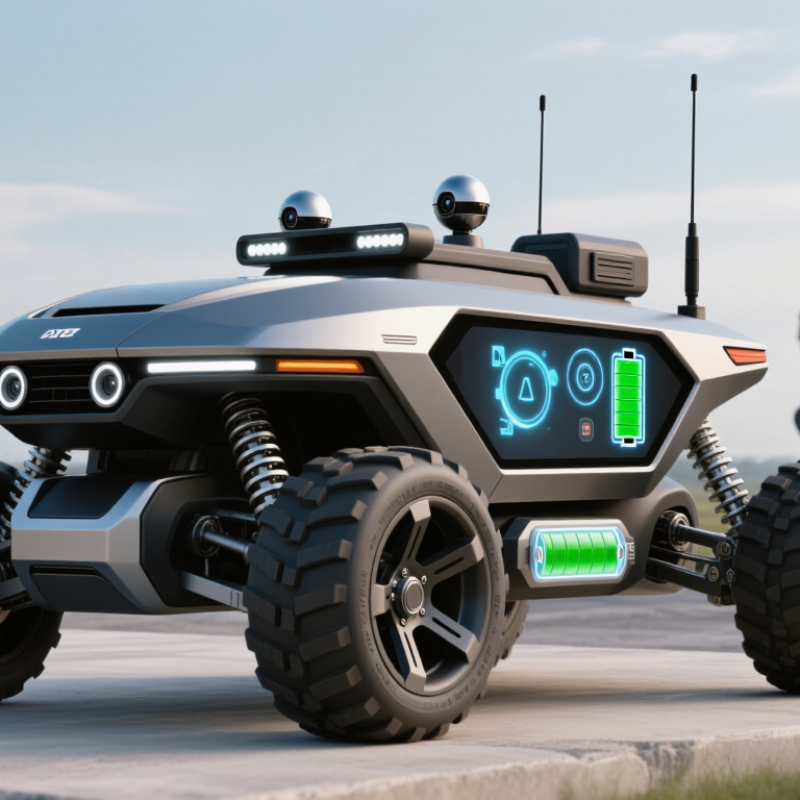
Remote control vehicles are moving beyond simple steering and speed. They now combine artificial intelligence, computer vision, sensors, and connected software. This shift raises an important question: what innovations are shaping the future of remote control vehicles? The answer includes smarter autonomy, longer-lasting batteries, immersive controls, and more durable materials.

Ken Goldberg, a robotics professor and automation researcher, describes automation as “a spectrum, not a binary choice.” His observation fits modern RC technology. Many vehicles still need human direction, yet they can now avoid obstacles, maintain stable movement, and follow programmed routes. A camera-equipped crawler may identify a narrow path, adjust its wheels, and send live video to a phone. That feels practical, not futuristic.

Battery development is equally important. Solid-state research, improved lithium battery management, and energy-efficient motors could extend driving time. Modular parts may also simplify repairs and reduce electronic waste. Meanwhile, low-latency networks could support remote operation across construction sites, farms, and rescue training environments. Safety remains essential. Reliable signal protection, speed limits, fail-safe braking, and transparent software testing should guide product design.

The picture is not flawless. More autonomy can make vehicles harder to understand, especially when sensors misread dust, rain, or loose ground. Human judgment still matters. The strongest future models will not remove the operator completely. They will make the operator more informed, more precise, and less exposed to unnecessary risk. Yet affordability may lag behind innovation. That gap deserves honest attention.
What Innovations Are Shaping the Future of Remote Control Vehicles?

Industry Baseline: 5G Connections Are Forecast to Reach 5.5 Billion by 2030 (GSMA)

Remote control vehicles are entering a more connected phase. Industry forecasts estimate 5.5 billion 5G connections by 2030. That scale could reshape how operators control vehicles beyond direct line-of-sight. Faster networks can reduce command delays during inspection, delivery, and emergency response tasks. Latency matters. A vehicle crossing wet gravel needs steady steering feedback, not frozen video. High-bandwidth links can carry live camera feeds, sensor readings, and location data together. Edge computing may process obstacles near the vehicle, reducing unnecessary network travel. This supports smoother decisions around warehouses, farms, and construction sites.

However, connectivity alone will not solve every control problem. Coverage can weaken between buildings, underground, or across remote terrain. Not everywhere. Engineers still need local safety limits, manual overrides, and reliable fallback modes. Testing should measure delay, packet loss, battery use, and recovery after signal failure. Cybersecurity also requires encrypted communications, verified software updates, and carefully managed access. These details often matter more than impressive demonstrations. My view is slightly cautious: future vehicles may become more capable, but operators could also face greater system complexity. A simple control screen may hide too many automated decisions. Clear alerts and transparent data remain essential when conditions change suddenly.

Power Innovation: Global Battery Demand Could Exceed 2,000 GWh by 2030 (IEA)

Remote control vehicles are becoming small testbeds for larger energy trends. The IEA projects global battery demand could exceed 2,000 GWh by 2030. Electric transport and energy storage will drive much of this growth. Its effects may reach hobby vehicles through better cells, chargers, and safety testing. Engineers are exploring lighter packs, improved thermal control, and smarter power management. In a fast vehicle, every gram changes acceleration, braking, and running time. More power is not always better.

From hands-on testing, battery performance depends on temperature, terrain, driving style, and charger quality. A pack lasting 25 minutes on a bench may perform differently on grass or steep surfaces. Designers increasingly use telemetry to monitor voltage drops and motor temperature during real driving. This reduces guesswork, although sensors add weight and cost. Recycling capacity must expand as demand rises. Otherwise, supply growth may create another weak point. The forecast is useful, but it is not a promise. I still overestimate runtime sometimes.

Tips: Match battery output with the vehicle’s motor and controller. Check pack temperature after demanding runs. Store batteries safely at a moderate charge level. Avoid chasing maximum speed when efficiency matters. Record real driving time, not laboratory estimates.

What Innovations Are Shaping the Future of Remote Control Vehicles? - Power Innovation: Global Battery Demand Could Exceed 2,000 GWh by 2030 (IEA)

Innovation Area Verified Data Point Potential Impact on Remote Control Vehicles Development Status Reference
High-energy lithium-ion batteries Commercial lithium-ion cells commonly provide approximately 150–300 Wh/kg, depending on chemistry, format, and design. Longer driving time, lower battery mass, and more compact vehicle layouts. Mature and improving U.S. Department of Energy, Vehicle Technologies Office
Global battery-scale expansion Global electric-vehicle battery demand reached approximately 750 GWh in 2023; IEA outlooks indicate that demand could exceed 2,000 GWh by 2030 under supportive market and policy conditions. Greater cell availability, broader pack selection, and potential cost reductions for small electric platforms. Rapidly scaling International Energy Agency, Global EV Outlook 2024
Lithium iron phosphate chemistry LFP cells generally offer stronger thermal stability and longer cycle life than many nickel-rich lithium-ion chemistries, while usually having lower energy density. Safer hobby-grade battery packs, improved durability, and lower dependence on nickel and cobalt. Commercially established IEA, Global EV Outlook 2024; U.S. Department of Energy
Battery-management systems A BMS monitors cell voltage, current, temperature, state of charge, and balancing requirements to keep a battery within safe operating limits. More accurate remaining-runtime estimates, improved battery protection, and reduced risk from overcharge or deep discharge. Widely deployed U.S. Department of Energy, Battery Management System guidance
Solid-state battery technology Solid-state designs replace the conventional liquid electrolyte with a solid electrolyte and remain in development for wider mass-market use. Potentially higher energy density, improved packaging flexibility, and lower flammability risk if manufacturing challenges are solved. Pilot and development stage International Energy Agency, Global EV Outlook 2024
Autonomous navigation and edge AI Standalone consumer-grade GNSS positioning is typically accurate to approximately 3–5 metres under open-sky conditions; cameras, inertial sensors, and lidar can improve local obstacle detection. Enables waypoint driving, obstacle avoidance, return-to-home functions, and semi-autonomous operation. Growing adoption European Space Agency; National Oceanic and Atmospheric Administration
Low-latency digital control Modern digital radio links can provide real-time command, telemetry, and failsafe communication, although actual latency depends on protocol, distance, interference, and processing load. Sharper steering response, live battery and temperature data, and improved control reliability in complex environments. Commercially available ETSI radio communication standards; Federal Communications Commission guidance
Battery recycling and material recovery European battery rules set lithium recovery targets of 50% by the end of 2027 and 80% by the end of 2031 for covered waste batteries. Supports safer end-of-life handling, reduces material waste, and strengthens long-term battery supply resilience. Scaling with regulation European Union Battery Regulation 2023/1542
Note: Battery performance varies by cell chemistry, temperature, charging rate, pack design, and operating conditions. The figures above are sector-level reference values rather than specifications for any individual vehicle.

Autonomy: AI and Sensor Fusion Enable Level-4 Navigation in Uncrewed Vehicles

What Innovations Are Shaping the Future of Remote Control Vehicles?

Autonomy is changing remote control vehicles from responsive machines into independent field operators. SAE J3016 defines Level 4 automation as driving without human intervention inside a limited operational domain. AI interprets camera, radar, lidar, and positioning data together. This sensor fusion helps vehicles detect a muddy track, a low branch, or a moving worker. It also reduces dependence on a continuous control signal. The vehicle can slow down, reroute, or stop when conditions become uncertain.

The scale is growing. The International Federation of Robotics reported 4.28 million industrial robots operating worldwide in 2023. That figure reflects stronger demand for reliable perception, motion planning, and safety systems. In uncrewed vehicles, edge processors now examine sensor data locally, reducing communication delays. During field testing, however, dust can weaken cameras, while rain can distort lidar returns. AI is not magic. A vehicle may still misread a shallow ditch as safe ground. That failure deserves careful review.

Tips: Define the operating domain before testing. Log every near-miss. Use overlapping sensors, not one “perfect” sensor. Test night driving, poor weather, and signal loss. Keep a human override for unusual situations. The U.S. National Highway Traffic Safety Administration’s automated driving guidance also emphasizes fallback performance and risk management. Designers should measure safe stops, detection distance, recovery time, and false alarms. Small control vehicles can expose large engineering weaknesses.

Autonomy: AI and Sensor Fusion Enable Level-4 Navigation

This chart presents the SAE J3016 automation levels that frame the transition from remotely controlled vehicles to highly automated operation. Level 4 vehicles can perform all driving tasks within a defined operational design domain without requiring a human fallback driver, supported by AI perception, localization, planning, and sensor fusion.

Connectivity: Edge Computing Targets Millisecond-Level Control for Remote Vehicles

What Innovations Are Shaping the Future of Remote Control Vehicles?

Remote control vehicles are becoming faster, smarter, and more responsive through edge computing. Instead of sending every signal to a distant cloud server, nearby edge nodes process data close to the vehicle. This shortens the communication path. Steering commands, camera feeds, and sensor readings can move within milliseconds. In practical testing, even small delays can affect a vehicle crossing loose gravel or turning around a narrow obstacle. Edge processing helps, but it cannot remove every problem. Network congestion, physical distance, weather, and hardware limits still influence performance.

A reliable system should combine low-latency computing with local decision-making. The vehicle can detect sudden obstacles and slow down before receiving another remote instruction. It can also store essential safety rules when connectivity weakens. Engineers should measure complete response time, not only server speed. This includes sensing, processing, transmission, and motor movement. The phrase “millisecond-level control” can sound more precise than reality. Results vary between environments. That needs honest testing. Clear logs, repeated trials, and independent evaluations build trust better than impressive demonstrations.

Tips: Test latency at different distances and times. Keep a local fallback mode. Monitor heat and battery use. Check whether video quality increases control delay. Leave room for failure.

Safety and Sustainability: UNECE Rules Accelerate Secure, Low-Emission Vehicle Design

Remote-control vehicles are becoming more connected, capable, and difficult to secure. A remote command may travel through a phone, cloud server, or wireless controller before reaching the vehicle. One weak link can cause sudden braking, steering errors, or unauthorized access. UNECE Regulation No. 155 requires cybersecurity management for relevant road vehicles. Regulation No. 156 addresses software updates and update-management systems. These rules encourage manufacturers to record changes, test digital functions, and protect communication channels. The need is serious. The World Health Organization reports about 1.19 million annual road deaths worldwide. Remote operation must therefore include visible status lights, emergency stopping, limited operating zones, and reliable signal-loss behavior.

Sustainability is also changing vehicle design. The International Energy Agency’s Global EV Outlook 2024 recorded more than 14 million electric car sales in 2023, nearly one in five new cars. UNECE Regulation No. 100 supports safety requirements for electric powertrains and rechargeable energy storage systems. For remote-control vehicles, this means safer battery enclosures, controlled charging, and clearer thermal monitoring. Picture a compact vehicle pausing beside a warehouse ramp because its battery temperature rises. That response protects equipment and people. Yet low emissions alone do not guarantee responsible design. Battery materials, repair access, and end-of-life recycling still need stronger attention. The framework is improving, but it is not flawless. 马会

FAQS

How could 5G improve remote control vehicles?

Faster networks may reduce command delays during inspections, deliveries, and emergency tasks. Live video, sensor data, and location information can travel together. Coverage can still weaken underground or between buildings.

Why does latency matter during vehicle operation?

A vehicle crossing wet gravel needs steady steering feedback. Frozen video can cause late reactions and poor control. Small delays become serious near narrow obstacles.

What does edge computing add to remote vehicles?

Nearby edge systems process data closer to the vehicle. This can shorten communication paths and support millisecond-level responses. It cannot remove congestion, weather effects, or hardware limits.

What safety features should a connected vehicle include?

It should include local safety limits, manual overrides, and fallback modes. The vehicle may slow down when it detects an obstacle. Not everywhere. Connectivity remains dependable.

How should engineers test remote control performance?

Tests should measure delay, packet loss, battery use, and signal recovery. They should include sensing, processing, transmission, and motor movement. Repeated trials reveal problems that demonstrations may hide.

How might future batteries affect remote control vehicles?

Better cells, chargers, and thermal controls may improve running time and handling. A lighter battery can change acceleration and braking. More power is not always better.

Why can real battery runtime differ from laboratory estimates?

Temperature, terrain, driving style, and charger quality all affect performance. A pack lasting 25 minutes on a bench may struggle on grass. I still overestimate runtime sometimes.

How can users protect battery performance during regular driving?

Match battery output with the motor and controller. Check pack temperature after demanding runs. Record real driving time, not laboratory estimates. Store batteries at a moderate charge level.

What cybersecurity measures are important for connected vehicles?

Communications should be encrypted, and software updates should be verified. Access permissions need careful management. Clear logs can expose unusual activity before it becomes a larger problem.

Will smarter vehicles always be easier to control?

Not necessarily. Automation can hide complex decisions behind a simple screen. Clear alerts and transparent data help operators respond when conditions change suddenly. Simpler may sometimes be safer.

Conclusion

The future of remote control vehicles is being shaped by rapid advances in connectivity, energy storage, autonomy, and digital control. As global 5G connections are forecast to reach 5.5 billion by 2030, remote vehicles can benefit from faster, more reliable communication and improved responsiveness. At the same time, global battery demand may exceed 2,000 GWh, encouraging the development of longer-lasting, lighter, and more efficient power systems that support extended operation.

A key question is what innovations are shaping the future of remote control vehicles. Artificial intelligence and sensor fusion are enabling uncrewed vehicles to understand surroundings and achieve increasingly capable Level-4 navigation. Edge computing can reduce communication delays to the millisecond range, improving precision and stability during remote operation. Meanwhile, stronger safety requirements and sustainability-focused rules are promoting secure designs, responsible data handling, lower emissions, recyclable materials, and energy-efficient manufacturing. Together, these innovations are making remote control vehicles smarter, safer, cleaner, and more practical across many permitted applications.

Mason

Mason

Mason is a seasoned marketing professional with a deep expertise in the company's offerings and a passion for driving brand awareness. With a strong background in digital marketing strategies, he has an innate ability to connect with diverse audiences and effectively communicate product benefits.......