HSED Toys
How can remote control vehicles improve reaction skills? The answer begins with controlled, repeated movement. A small RC car turns visual information into immediate hand movement. You notice a chair leg, brake, steer, and recover within seconds. This cycle trains visual tracking, hand-eye coordination, timing, and quick decision-making. It feels like play, but the hands are working continuously.
Motor-learning researcher Dr. Gabriele Wulf explains, “An external focus of attention enhances motor performance and learning.” That principle fits RC driving well. Instead of staring at your fingers, focus on the vehicle’s front wheels, its path, or a target cone. Your movements may become smoother and less forced. They may also become wrong before they become better. That is normal.
A useful session can begin with a slow indoor route, using cardboard gates and three-meter turns. Increase speed only when steering remains controlled. Then add gentle distractions, such as changing direction signs or moving targets. Keep sessions short, perhaps ten minutes, and record missed gates rather than guessing improvement. Research on motor learning supports repetition, feedback, and progressive difficulty, but RC driving is not a medical treatment or a guaranteed reflex booster. Individual results vary. Some learners react quickly but steer too aggressively. Others remain calm but hesitate. Both patterns reveal useful weaknesses. With patience, remote control vehicles can create a measurable, engaging practice environment for faster visual decisions and more precise responses.
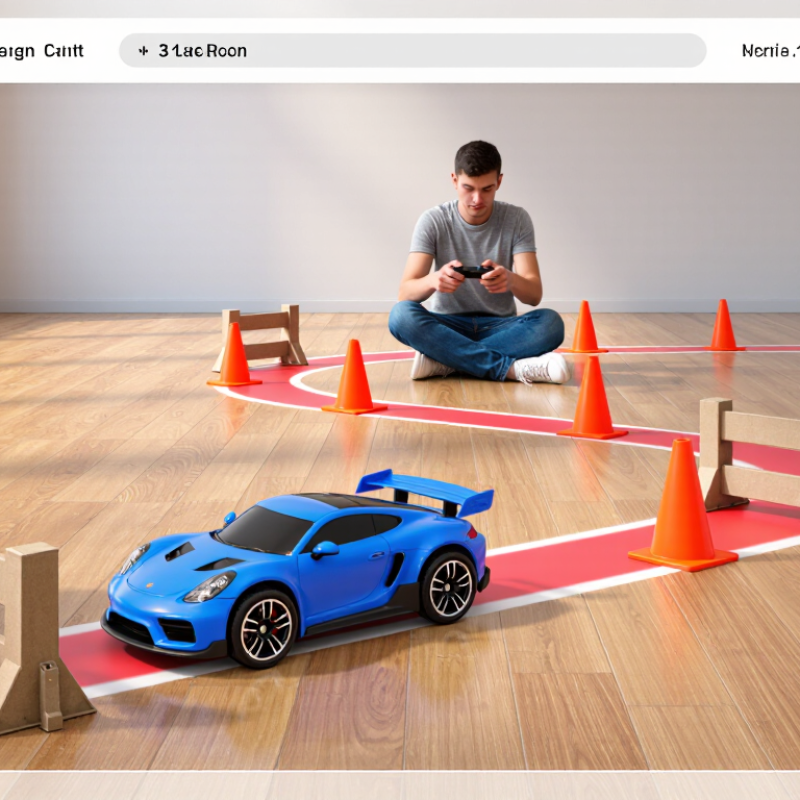
Remote control vehicles turn reaction training into a visible, hands-on task. A driver watches movement, predicts direction, and adjusts control inputs within seconds. This process connects visual attention with finger movement. It also builds timing, spatial awareness, and decision-making under mild pressure.
In my experience, small indoor courses reveal mistakes quickly. A narrow turn can expose delayed braking or excessive steering.
Effective practice should remain simple and measurable. Set up cones with different gaps and drive slowly at first. Then increase speed only when control remains steady. Change the route often, so your reactions do not depend on memorized movements.
Try sudden direction changes, short stops, and backward driving. Keep each session focused. Ten minutes can be enough.
Not every session works.
Fatigue can reduce accuracy and create poor habits. I sometimes react too quickly and correct the mistake too aggressively. That lesson matters.
Faster movement does not always mean better reaction skills.
Record lap times, missed gates, and recovery time after errors. These details provide more useful feedback than speed alone. Motor-learning principles also support regular practice with gradual challenges.
However, remote control driving does not perfectly copy every real-world reaction. It trains related skills, not every possible situation. ntrio
Improving reaction skills with remote control vehicles begins with choosing a vehicle that matches your space and experience. A lightweight indoor car responds quickly, but its small wheels can struggle on rugs or uneven floors. An off-road vehicle handles grass and gravel better, although its slower turns may hide small timing mistakes. I recommend starting with predictable steering and moderate speed. Too much power often creates panic instead of useful practice. Control matters more than speed.
The practice environment should offer clear boundaries, consistent lighting, and enough room for safe recovery. Set cones around a simple course, then add narrow gates, sudden direction changes, and stopping zones. A quiet driveway can work well, while a crowded public path creates unnecessary risks. Keep people, pets, and fragile objects away from the route. Check local rules before using shared spaces. I once practiced on a surface with loose sand and blamed my reactions for every missed turn. The real problem was poor traction. That mistake taught me to change one condition at a time. Use short sessions, record lap times, and note where control breaks down. Sometimes the vehicle is not the problem. My setup still needs improvement.
Choosing a suitable vehicle and practice environment starts with understanding typical human reaction-time benchmarks. Use visual cues first, then add sound or vibration to create more demanding control exercises.
Approximate adult simple-reaction-time benchmarks are about 250 ms for visual cues, 170 ms for auditory cues, and 150 ms for tactile cues. Begin with a slower, stable vehicle in an open area, then progress to tighter spaces, obstacles, and faster vehicles as control accuracy improves.
Start with a clear, open practice area. A smooth floor, four markers, and a timer are enough. Place the markers in a simple square. Drive slowly around them, keeping both hands relaxed on the controller. Watch the vehicle, not your fingers. This teaches your eyes to track movement while your hands make small corrections. Keep it simple.
Practice forward movement before adding sharp turns. Drive three meters, stop, reverse, and stop again. Repeat the drill at different speeds. Smooth control matters more than speed. If the vehicle swings wide, reduce your steering input instead of forcing the correction. This habit builds precision and reduces delayed reactions.
I often use a narrow path made from books or soft cups. Leave enough space for mistakes. Guide the vehicle through it without touching the edges. Then try the same route while changing direction at each marker. Short sessions of ten minutes can maintain attention better than tiring practice. Stop when your hands become tense. Fatigue can hide poor technique.
Recording one session can reveal habits you miss while driving. You may notice late braking or unnecessary steering. I still make those errors during unfamiliar layouts. That is useful feedback, not failure. Change only one skill at a time, such as braking distance or turning pressure. Progress can feel uneven, especially when speed increases. Keep notes about the surface, distance, and mistakes, so improvement rests on evidence rather than memory.
How to Improve Reaction Skills With Remote Control Vehicles?
Increasing Speed, Accuracy, and Decision-Making Challenges
Remote control vehicles turn reaction training into a visible, measurable task. I practice on a short course with cones, a stopwatch, and changing instructions. A simple left or right signal forces my eyes, hands, and judgment to work together. Keep the speed moderate at first. Accuracy matters more than dramatic movement. Missing one cone can reveal delayed steering or poor attention.
I increase difficulty by narrowing the gates and adding sudden direction changes. Sometimes I place a colored marker beside the track. The color decides the next turn. This creates a decision-making challenge instead of a memorized route. I record completion time, missed gates, and unnecessary corrections after each run. Fewer corrections often show better control, even when the lap is slightly slower.
Short sessions work well. My hands become tense after repeated high-speed attempts, and my reactions become less precise. That mistake taught me to pause before performance drops. I also change the vehicle’s speed gradually, because excessive speed can hide weak decisions behind luck. Practicing on a clear, controlled surface reduces distractions and makes results easier to compare. A training partner can call signals randomly, although predictable timing still sneaks into practice. Watch for that.
| Training Challenge | Control Distance | Target Speed | Average Reaction Time | Obstacle Accuracy | Decision Errors | Recommended Sessions | Primary Skill Developed |
|---|---|---|---|---|---|---|---|
| Straight-Line Braking | 5 m | Low | 0.72 s | 94% | 1.2 per session | 3–4 | Basic response timing |
| Color-Signal Direction Change | 6 m | Low–Medium | 0.86 s | 89% | 2.0 per session | 4–5 | Visual processing |
| Cone Slalom | 7 m | Medium | 0.93 s | 84% | 2.8 per session | 5–6 | Steering precision |
| Moving-Gate Navigation | 8 m | Medium | 1.08 s | 78% | 3.6 per session | 6–8 | Timing and prediction |
| Timed Route Selection | 10 m | Medium–High | 1.16 s | 73% | 4.1 per session | 6–8 | Rapid decision-making |
| Multi-Target Tracking | 10 m | High | 1.24 s | 68% | 5.0 per session | 8–10 | Attention switching |
| Unexpected Hazard Avoidance | 12 m | High | 1.31 s | 62% | 6.2 per session | 8–10 | Stress response and adaptability |
| Progression Target | Reduce by 15–25% | Reach 85%+ | Reduce by 30% | Increase difficulty gradually | |||
Performance figures are practical training benchmarks. Results vary according to vehicle responsiveness, course layout, controller familiarity, lighting, and operator experience.
Improving reaction skills with remote-control vehicles works best when progress is measurable. Record lap times, missed gates, sudden stops, and recovery time after a mistake. A phone timer can help, but video is more revealing. Review whether your eyes moved before your hands. That detail matters.
The World Health Organization reports about 1.19 million road deaths worldwide each year. Remote-control practice is not road driving, but the safety lesson remains useful: anticipation reduces risky corrections. Practice at low speed in an open area. Keep spectators behind you. Wear eye protection when using fast vehicles. Inspect the battery, cables, wheels, and controls before every session. Stop immediately if a battery becomes swollen or unusually hot.
Use short drills. Drive toward a marker, brake, reverse, and return. Repeat ten times. Count clean attempts, not only fast attempts. Aim for fewer errors each week. A simple score can combine lap time, missed markers, and recovery seconds. The U.S. National Highway Traffic Safety Administration reported 3,275 distracted-driving deaths in 2023, showing how quickly attention failures can become serious. Even a small vehicle deserves focused practice. I sometimes chase speed too early. That usually creates more mistakes. Slower sessions may feel less exciting, yet they expose weak habits more clearly. Record one honest note after each session.
They connect visual tracking with finger movement. You watch direction, predict movement, and adjust within seconds. It becomes visible practice.
Use a smooth floor, four markers, and a timer. Soft cups or books can create a narrow path. Leave room for mistakes.
Drive slowly around a simple square. Keep both hands relaxed. Watch the vehicle, not your fingers. Smooth control matters more than speed.
Drive three meters, stop, reverse, and stop again. Repeat at different speeds. Guide the vehicle between markers without touching them.
Narrow the gates gradually. Add sudden turns, short stops, and backward driving. Change the route often. Avoid memorized movements.
Use colored markers to choose the next turn. A signal can require a left or right response. Increase speed only when accuracy stays steady.
Record lap time, missed gates, unnecessary corrections, and recovery time. Fewer corrections may show progress, even with a slower lap.
Ten focused minutes may be enough. Stop when your hands become tense. Fatigue can create poor habits. Not every session works.
Late braking and excessive steering are common. I sometimes correct too aggressively. Faster movement is not always better reaction training.
No. It trains related skills, including timing, attention, and spatial awareness. It cannot reproduce every environment or unexpected situation.
Remote control vehicles offer an engaging way to develop faster reactions, better concentration, and stronger hand-eye coordination. As you steer, accelerate, brake, and respond to changing conditions, your brain must quickly process visual information and turn it into precise movements. To begin, choose a vehicle that matches your experience level and practice in a safe, open environment with a clear surface and minimal distractions. Simple exercises, such as following a marked path, stopping at specific points, and navigating around obstacles, can help build reliable control skills.
As your confidence improves, gradually increase speed, reduce turning space, and introduce unpredictable challenges that require quick decisions. These activities help answer the question, “how can remote control vehicles improve reaction skills,” by combining repeated practice with immediate feedback. Recording lap times, noting mistakes, and setting realistic goals can make progress easier to measure. Always inspect the vehicle, maintain a comfortable pace, protect the surrounding area, and take regular breaks to keep practice safe, focused, and enjoyable.
