How to Improve Remote Control Vehicle Performance?

Time:2026-09-22 Author:Oliver
0%

Improving remote control vehicle performance begins with understanding how each component behaves under real driving conditions. A vehicle that feels fast on a smooth floor may struggle on gravel, wet grass, or thick carpet. The key question is: what factors affect remote control vehicle performance? Battery health, motor temperature, tire grip, gear alignment, suspension setup, and driving surface all matter. Small changes can produce noticeable results.

In practical testing, I begin with a fully charged battery and inspect the tires for uneven wear. I measure running time, acceleration, and motor temperature instead of relying only on driving impressions. A clean gear mesh can reduce noise and wasted power. Properly adjusted suspension can keep the tires planted during sharp turns. Even tire pressure or foam inserts may change cornering behavior. Check the manual.

Maintenance should remain realistic. Replacing every part is not always the best solution. Sometimes, cleaning dust from the drivetrain improves performance more than installing expensive upgrades. I once blamed a weak motor, but the real problem was a loose battery connector. That mistake changed my testing method. I now change one variable at a time and record the result. This approach follows basic engineering practice and makes conclusions easier to verify. Weather also deserves attention, because cold temperatures can reduce battery output and stiffen some materials. Performance gains should be tested carefully, with safety and manufacturer limits in mind. No setup is perfect. Even a well-tuned vehicle may need different settings for each surface.
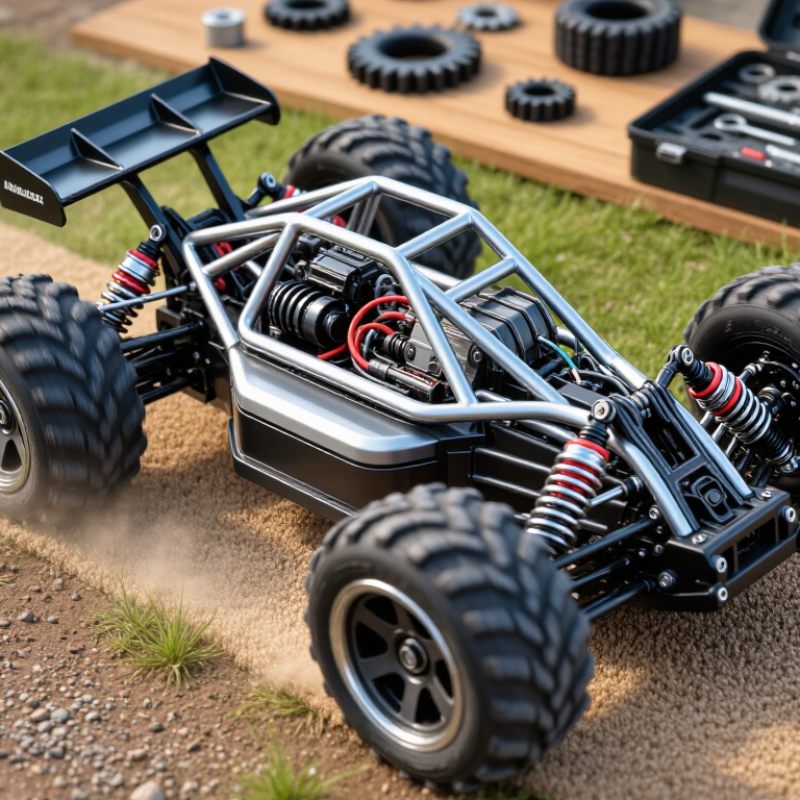
How to Improve Remote Control Vehicle Performance?

Assess the Vehicle’s Current Performance and Identify Weaknesses

How to Improve Remote Control Vehicle Performance?

Assess the vehicle on a consistent surface before changing any parts. Use the same battery, driver, and route for every test. Record acceleration, top speed, stopping distance, and running temperature. A phone stopwatch can help, but it is not perfectly precise. Repeat each test three times.

Watch how the vehicle behaves, not only the numbers. Slow acceleration may indicate a weak battery connection, excessive weight, or drivetrain friction. Uneven steering often comes from loose linkages or mismatched wheel alignment. Check the tires for unequal wear and confirm that each wheel spins freely. Listen for grinding sounds. They may reveal damaged gears or dry bearings.

Temperature provides useful evidence. After several minutes, carefully measure the motor and electronic components with a suitable thermometer. Excessive heat can suggest overload, poor airflow, or incorrect gearing. I once blamed the motor for weak performance, but a partially seized bearing was the real problem. That mistake showed why testing one change at a time matters. Inspect wiring, connectors, suspension joints, and battery voltage before making adjustments. Keep a simple test log with weather, surface condition, and observed symptoms. Small details matter. A dusty track can make a healthy vehicle appear unreliable.

Optimize the Battery, Motor, and Electronic Speed Controller

How to Improve Remote Control Vehicle Performance?

Battery, motor, and electronic speed controller must work as one system. Start with the battery’s voltage, discharge rating, and internal resistance. The U.S. Department of Energy reports that modern lithium-ion cells commonly reach about 150–250 Wh/kg, but usable output falls as temperature and current rise. In practice, a cool battery may feel powerful for several minutes, then soften on a long straight. Keep connectors short, clean, and firmly seated. Measure voltage before and after a run. A large voltage drop often reveals resistance that visual inspection misses. I still record these readings imperfectly.

The motor needs suitable gearing, not simply higher speed. The U.S. Department of Energy’s motor-system data places efficient electric motors broadly above 85%, yet poor gearing can turn that efficiency into heat. Choose a smaller pinion when the motor feels hot, acceleration fades, or the vehicle repeatedly cuts power. The electronic speed controller should match the motor’s continuous current, not only its advertised peak. Research published through IEEE commonly reports brushless drive efficiencies above 90% under controlled loads, but real vehicles face dust, shocks, and rapid throttle changes. Set smooth throttle response and verify braking carefully. After each run, inspect motor temperature, ESC temperature, and battery swelling. My earlier setup ignored airflow; that mistake cost more performance than expected.

Improve Traction, Suspension, and Weight Distribution

Improving a remote control vehicle starts where the tires meet the ground. SAE J670 and ISO 8855 describe traction through tire force, load, and slip. In practical testing, softer tires can increase grip on dusty floors. However, excessive softness creates heat and steering delay. I usually clean the tires, mark the suspension arms, and test one change at a time. Small changes matter.

Weight distribution controls how evenly each tire works. A near-balanced setup often gives more predictable acceleration and braking. Try moving the battery only five millimeters, then record lap times and tire temperatures. Research on tire load sensitivity shows that doubling vertical load does not double available grip. The heavily loaded tire gains less than expected. That detail is easy to miss. A simple kitchen scale can reveal surprising differences between corners.

Suspension should keep the tires touching the surface, not merely look aggressive. Set ride height first, then adjust spring stiffness and damping. On rough ground, slightly softer damping can improve contact. On smooth ground, firmer control may reduce body movement. A 2023 SAE technical review of tire-force modeling supports testing under repeatable loads and surfaces. My earlier setups often used springs that were too stiff. Faster did not always mean quicker. Record three runs, reject inconsistent results, and inspect tire wear after every session.

How to Improve Remote Control Vehicle Performance? - Improve Traction, Suspension, and Weight Distribution

Performance Area Key Variable Baseline Condition Recommended Target or Adjustment Practical Test Method Expected Performance Benefit
Traction Tire contact and compound Tires are worn, hardened, or contaminated Use clean tires with even wear and a tread pattern suitable for the surface Clean the tires, inspect the tread, and compare wheel spin during repeated launches Less wheel spin, stronger launches, and more consistent corner exit speed
Traction Drivetrain power delivery Immediate throttle response causes wheel spin Increase throttle gradually over the first 1–2 seconds of acceleration Record launch distance and time using the same surface and battery charge Improved acceleration efficiency and reduced heat in the motor and drivetrain
Traction Differential balance Inside wheel unloads significantly in corners Use a moderately higher differential oil viscosity for more controlled torque transfer Compare inside-wheel spin and corner-exit stability after each adjustment More predictable cornering and improved drive out of turns
Suspension Ride height Chassis sits too high or bottoms out frequently Set the chassis approximately 5–8 mm above the ground on a smooth surface, subject to terrain and chassis design Measure at all four corners with the vehicle ready to run Lower center of gravity, reduced body roll, and better high-speed stability
Suspension Static droop Wheels lose contact when the vehicle crosses uneven ground Aim for approximately 25–35% of total suspension travel as static droop Measure fully extended and ride-height positions at each axle Improved wheel contact, bump absorption, and grip on uneven surfaces
Suspension Spring stiffness Vehicle feels harsh or repeatedly bottoms out Use the softest spring that prevents frequent bottoming under normal load Perform repeated curb or ramp tests and inspect suspension compression Better balance between mechanical grip, control, and chassis support
Suspension Damping rate Vehicle oscillates after bumps or reacts slowly to changes Adjust rebound and compression in small, equal steps; avoid excessive damping Push down each corner and observe whether it returns once without bouncing More stable landings, reduced bouncing, and improved steering precision
Weight Distribution Front-to-rear balance Front end pushes wide or rear end loses traction Start near a 45:55 front-to-rear distribution for a rear-driven vehicle, then tune for the layout Weigh each axle separately with the battery and body installed More neutral handling and improved traction during acceleration
Weight Distribution Left-to-right balance Vehicle turns differently in left and right corners Keep cross-weight and side-to-side differences as close to equal as practical Measure all four wheels on a level surface and compare diagonal totals More consistent cornering response in both directions
Weight Distribution Center of gravity height Vehicle rolls heavily, wheelies, or tips during direction changes Mount heavy components as low and close to the chassis center as possible Compare roll, wheel lift, and landing behavior before and after relocation Reduced body roll, improved stability, and more precise steering
Measurement Repeatability Results vary between test runs Change one setting at a time and repeat each test at least three times Use the same battery state, tires, surface, temperature, and driving line More reliable tuning decisions and easier identification of the best setup
Tuning principle: Make one change at a time, record the result, and prioritize tire contact, balanced suspension movement, and a low, symmetrical center of gravity.

Reduce Friction and Upgrade Essential Mechanical Components

Remote control vehicle performance often improves through small mechanical corrections, not dramatic power increases. Start by checking wheel bearings, axle shafts, and gear mesh. Dirt acts like grinding paste. Clean each part with a suitable, residue-free method. Then apply only the lubricant recommended for that component. Excess grease attracts dust and slows moving parts.

I measure wheel drag before changing anything. Lift the vehicle, spin each wheel, and compare how long it turns. A wheel that stops quickly may have a ​​bent shaft, tight bearing, or poor alignment. Replace damaged bearings with properly sized parts.

Inspect gear teeth under bright light. Sharp edges, uneven wear, or missing material indicate trouble. Set gear mesh carefully; it should move freely without noticeable slack. Too tight creates heat. Too loose damages teeth.

I once blamed the motor for weak acceleration. The real problem was a binding suspension arm. That mistake still influences my checks. Not every upgrade helps. Stiffer springs can reduce grip on rough ground, while heavier metal parts may increase drivetrain load. Test one change at a time and record battery voltage, running temperature, and speed. After each run, check screws, shafts, and gear covers. A short test loop reveals more than a fast launch.

Test, Adjust, and Maintain the Vehicle for Consistent Performance

How to Improve Remote Control Vehicle Performance?

Consistent performance begins with repeatable testing. I use the same flat surface, battery charge, and ten-meter route for every run. A phone stopwatch helps, although hand timing is not perfectly precise. Record acceleration, steering response, stopping distance, and motor temperature. Small changes become easier to understand when the results are written down.

Before adjusting anything, inspect the vehicle carefully. Clean dust from the tires, suspension joints, and gear area. Check that each wheel spins freely and that the tire pressure feels even. Loose connectors can cause brief power loss. I once blamed the motor for weak acceleration, but a partly disconnected battery lead was responsible. That mistake taught me to inspect simple causes first.

Make one adjustment at a time. Slightly change suspension stiffness, steering trim, or gear alignment, then repeat the same test. If the vehicle pulls left, check wheel alignment before increasing steering correction. Avoid running the motor continuously when its casing becomes unusually hot. Let it cool, and inspect for friction or blocked airflow. Battery contacts should remain clean and firmly seated. A maintenance log should include the date, surface, battery condition, adjustments, and results. Some settings work well indoors but fail on loose ground. That is normal. Performance depends on conditions, not only hardware. If a change improves speed but reduces control, it may not be a real improvement. Reliable tuning requires patience, honest measurements, and occasional acceptance that the previous setup was better.

FAQS

How should the battery, motor, and speed controller work together?

They must match voltage, current, and heat limits. A powerful motor cannot fix a weak battery. Measure voltage before and after driving. A large voltage drop may reveal hidden connector resistance. My readings are not always perfect.

What battery checks can improve vehicle performance?

Check the battery’s voltage, discharge rating, and internal resistance. Keep it cool during operation. Heat reduces usable output. Inspect connectors for dirt, looseness, or damage. Short, clean connections help maintain power.

How can gearing prevent overheating?

Use gearing suited to the motor and driving surface. Choose a smaller pinion if acceleration fades or the motor becomes hot. Watch for repeated power cuts. More speed is not always better. Sometimes, slower gearing works better.

How should the speed controller be selected and adjusted?

Match its continuous current rating to the motor’s needs. Do not rely only on peak ratings. Set smooth throttle response. Test braking carefully on an open, controlled surface. Rapid throttle changes create extra heat.

How can I find mechanical friction?

Lift the vehicle and spin each wheel by hand. Compare how long each wheel turns. A wheel stopping quickly may have a bent shaft, tight bearing, or poor alignment. Dirt behaves like grinding paste. Clean parts carefully.

What should I inspect in the gears and bearings?

Check bearings, axle shafts, and gear teeth under bright light. Sharp edges or missing material indicate wear. Set gear mesh with free movement and minimal slack. Tight mesh creates heat. Loose mesh damages teeth.

Do heavier parts and stiffer springs always improve performance?

No. Heavier parts can increase drivetrain load. Stiffer springs may reduce grip on rough ground. Test one change at a time. Record temperature, battery voltage, and speed. My earlier assumptions were often too optimistic.

How can I test adjustments consistently?

Use the same flat surface, battery charge, and ten-meter route. Record acceleration, steering response, stopping distance, and motor temperature. A phone stopwatch helps, but hand timing remains imperfect. Repeat the same test after every adjustment.

What maintenance should happen after each run?

Check screws, shafts, connectors, gear covers, and airflow paths. Inspect the motor, controller, and battery for unusual heat or swelling. Let hot components cool. Clean tire and suspension areas. A short test loop reveals problems quickly.

How do I know whether an upgrade is genuinely better?

Compare control, speed, heat, and battery condition together. Faster acceleration may reduce stability or runtime. Settings that work indoors can fail on loose ground. If control worsens, the upgrade may not be an improvement. Sometimes the older setup was better.

Conclusion

Improving remote control vehicle performance begins with a careful evaluation of its current behavior. Observe acceleration, top speed, steering response, stability, and runtime to identify weaknesses. Understanding what factors affect remote control vehicle performance helps guide practical upgrades, including battery condition, motor efficiency, and electronic speed controller settings. A reliable power system can provide smoother acceleration and more consistent operation.

Mechanical improvements are equally important. Better traction, balanced suspension, and proper weight distribution can improve control on different surfaces, while reducing friction in the drivetrain helps transfer power more efficiently. Inspecting gears, bearings, axles, and other essential components can prevent energy loss and premature wear. After each adjustment, test the vehicle under similar conditions and make changes gradually. Regular cleaning, tightening, lubrication, and battery care will help maintain stable performance and extend the vehicle’s service life.

Oliver

Oliver

Oliver is a seasoned marketing professional with a wealth of expertise in driving brand awareness and engagement. With a deep understanding of our company's product offerings, he consistently delivers high-quality content that enriches our professional blog. His insights not only shed light on......