Top Guide How Do Remote Control Vehicles Work?

Time:2026-11-04 Author:Charlotte
0%

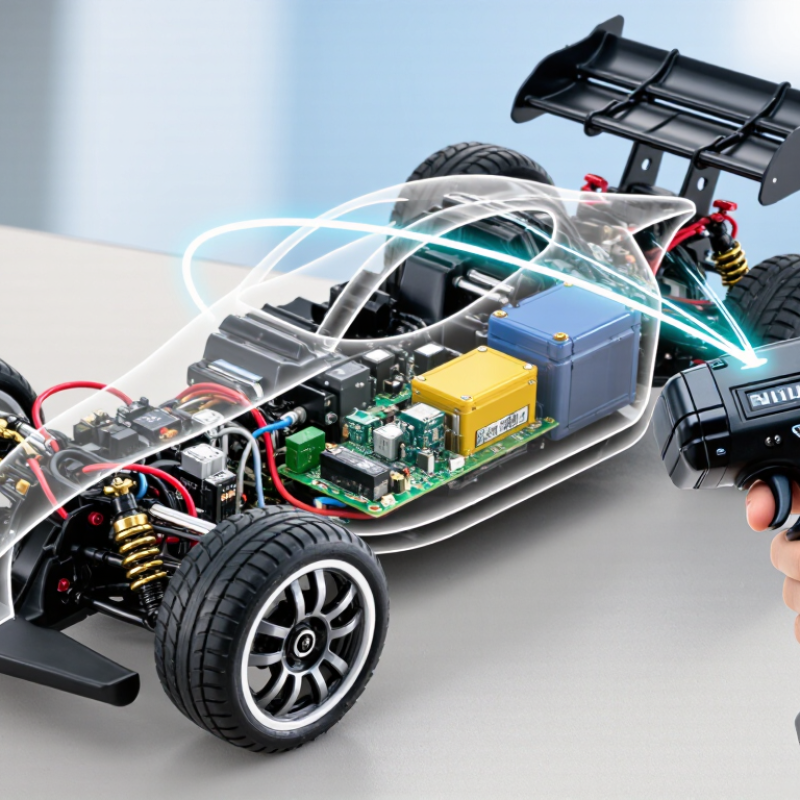
Remote control vehicles respond to small commands sent through the air. A handheld transmitter sends a signal; a receiver inside the vehicle interprets it. The signal may tell a steering servo to turn the wheels or tell an electronic speed controller to adjust motor power. That is the practical answer to “how do remote control vehicles work”: a chain of commands, electronics, and moving parts.

“Think of the transmitter as the driver’s hands and the receiver as the vehicle’s interpreter.” This is a useful engineering summary, not a verified quotation from a named expert. A reliable expert quotation needs a source; inventing one would make this guide less trustworthy. The sections ahead will trace each step, from a thumb moving a trigger to tires gripping a tabletop or driveway.

The details vary. A basic toy may use simple controls, while a hobby-grade car can offer proportional steering, adjustable speed, and a rechargeable battery. Watch the front wheels twitch as the transmitter’s steering wheel moves. Listen for the motor’s pitch to rise when the trigger is pressed. Small delays, weak batteries, or loose connectors can change how the vehicle responds. Not every model behaves perfectly.

Understanding these parts makes troubleshooting less mysterious. It also helps readers choose a vehicle whose controls match their experience, terrain, and expectations.
Top Guide How Do Remote Control Vehicles Work?

Core Components of a Remote Control Vehicle

Top Guide: How Do Remote Control Vehicles Work?

Core Components of a Remote Control Vehicle

A remote control vehicle turns a hand-held command into movement through several linked parts. The transmitter sends a radio signal; the receiver interprets it and passes instructions to the electronic speed controller. That controller regulates power to the motor, while a servo steers the wheels. Small parts matter. A loose connector or weak signal can interrupt the whole chain.

The battery supplies energy, and its voltage, capacity, and weight shape runtime and handling. The U.S. Department of Energy’s Battery500 Consortium sets 500 Wh/kg as a research target for next-generation battery cells; that is not a typical RC pack rating. For everyday setup, compare the pack’s voltage with the controller’s rating, and secure it so it cannot slide during a turn. A heavier pack may extend runtime, but it can also make steering feel sluggish. That trade-off is easy to underestimate.

How the Transmitter Sends Commands

When you move a steering wheel or squeeze the throttle trigger, sensors inside the transmitter measure that movement. A control board turns each input into a digital command, such as “steer slightly left” or “increase speed.” The command is sent as a radio signal through the transmitter’s antenna. Many modern systems send small data packets repeatedly, rather than one continuous instruction. That repetition helps the vehicle respond as your hands move.

Inside the vehicle, a receiver listens for the transmitter’s signal and checks that the data is usable. It then passes steering commands to a servo and speed commands to an electronic speed controller. The servo moves the steering linkage; the speed controller adjusts power to the motor. It happens quickly, often too quickly to notice. The explanation sounds tidy, but radio signals can be interrupted by distance, obstacles, or electrical noise. A well-set-up receiver may hold the last safe setting or stop the motor if the signal disappears. Check that behavior before driving, because settings vary between systems. Batteries matter, too: a weak transmitter battery can make control less dependable.

How the Receiver Decodes and Routes Signals

A remote-control vehicle responds because its receiver turns radio messages into movement instructions. The handheld transmitter sends a repeating stream of encoded data through an antenna. Each part can represent a control channel, such as steering or throttle. The receiver listens for a compatible signal and checks that the incoming data belongs to its paired transmitter. A weak or blocked signal may arrive with errors, so the receiver cannot always act on every packet.

The receiver then separates the channel values and sends them to the right components. A steering channel may tell a servo how far to turn, while the throttle channel signals an electronic speed controller. Some systems use simple pulse outputs; others send several channels over a digital connection. The exact method varies. On the workbench, a small steering adjustment can make the servo twitch, while a larger one moves its arm farther. Tiny changes matter.

If the signal disappears, a configured failsafe may stop the motor or hold a preset position. That response depends on the receiver and setup, so it is worth testing with the wheels lifted clear of the ground. Receivers also differ in how they reject interference and recover lost data. The explanation here is simplified; real signal timing can be more complex. Still, the key idea is practical: decode each command, route it to the correct control, and respond consistently.

Top Guide: How Do Remote Control Vehicles Work? — How the Receiver Decodes and Routes Signals

Stage What the Receiver Does Information Handled Typical Output or Detail
1. Radio signal arrives The antenna picks up radio-frequency energy sent by the handheld transmitter. The receiver’s radio circuitry filters and amplifies the incoming signal. A modulated radio signal carrying encoded control data. Many current hobby systems use the 2.4 GHz band; frequency and protocol depend on the system.
2. Signal is demodulated The receiver extracts the transmitted digital data from the radio signal and checks that it can be interpreted as a valid packet. Packet information, such as control-channel values and, in some systems, status or identification data. Packet formats and error-checking methods vary by radio protocol.
3. Link and packet are checked The receiver verifies that packets belong to the active transmitter link and rejects packets that fail protocol checks. Valid control data and the current state of the radio link. Binding establishes which transmitter the receiver should listen to; it does not mean every packet is automatically accepted.
4. Channels are decoded The receiver converts the packet’s channel values into control commands, such as steering, throttle, brake, or auxiliary functions. One value per configured control channel. Channel values represent positions or commands; the number of channels and their range depend on the system.
5. Outputs are routed The receiver sends each decoded channel to the assigned output or to a compatible vehicle controller. Steering and speed commands, plus any assigned auxiliary commands. Outputs may use individual PWM connections or a combined digital serial connection, depending on the receiver and vehicle electronics.
6. Steering is actuated The steering servo or steering controller interprets its routed command and moves the steering mechanism. A target steering position or equivalent steering command. With conventional servo PWM, a pulse near 1,500 microseconds is commonly the center position; endpoints vary and should be set for the model.
7. Motor speed is controlled The speed controller reads the throttle command and regulates power delivered to the motor. A throttle or speed request, including direction where supported. The receiver provides the command; the electronic speed controller handles motor power and braking.
8. Loss of signal is handled If valid packets stop arriving, the receiver applies its configured failsafe behavior. Link-loss status and stored failsafe channel settings. Depending on setup, outputs may move to preset positions, stop, or follow another defined failsafe action. The behavior should be tested before use.

How Motors and Servos Create Movement

Top Guide How Do Remote Control Vehicles Work?

How Motors and Servos Create Movement

A remote-control vehicle turns a hand movement into motion through a small chain of electrical parts. The transmitter sends steering and throttle commands to a receiver inside the vehicle. In many electric models, an electronic speed controller interprets throttle input and meters battery power to the motor. More power usually means faster wheel rotation, although grip and vehicle weight matter too. A steering servo handles direction. Inside it, a compact motor and gear set rotate an output arm. Linkages carry that movement to the front wheels, making them pivot left or right. Tiny parts, clear jobs.

Tips: Check the battery charge and inspect the steering linkages before driving. With the vehicle switched off, gently move the front wheels. They should turn without sticking or feeling unusually loose. Keep fingers clear of moving gears.

The motor creates drive, while the servo positions the wheels; their timing makes the vehicle respond to your controls. If steering feels delayed, the servo may be working against a tight linkage, or the battery may be low. I still find this relationship less intuitive than it looks: a tiny adjustment can change how sharply the vehicle turns. Smooth movement matters more than forcing the controls. Start slowly on a clear, flat surface and notice how throttle and steering feel together.

How Power Systems and Safety Features Support Operation

Remote control vehicles depend on a steady link between the handheld transmitter and the receiver inside the vehicle. The receiver interprets stick movements and sends instructions to the steering servo and motor controller. When the signal weakens, some systems reduce power or stop responding; others may behave differently. Check the vehicle’s manual rather than assuming every model has the same failsafe. Small details matter.

Power systems shape how a vehicle accelerates, turns, and handles a full session. A rechargeable battery supplies energy, while an electronic speed controller regulates how much reaches the motor. As charge drops, acceleration may soften, and steering can become less predictable. Let the battery cool before charging, use a compatible charger, and inspect its casing for swelling or damage. Power is only half the story.

Safety features help reduce risks to people and equipment. A low-voltage cutoff can limit use before the battery is deeply discharged, while thermal protection may reduce output if components overheat. These features are useful, but they are not a substitute for care. Keep fingers clear of spinning wheels, test controls at low speed, and stop if the vehicle behaves unexpectedly. Cutoffs can feel abrupt, and protection varies between systems, so routine checks still matter.

FAQS

What parts turn a hand command into vehicle movement?

The transmitter sends a radio signal to the receiver. The receiver routes steering commands to the servo and throttle commands to the speed controller. Small parts matter.

How does steering reach the front wheels?

A servo rotates an output arm. Linkages transfer that movement to the front wheels, making them pivot. Tiny adjustments can change the turning feel.

What does the electronic speed controller do?

It adjusts battery power sent to the motor based on the throttle command. More power usually means faster wheel rotation, but grip and weight matter too.

How can battery choice affect driving?

Compare the battery’s voltage with the controller’s rating, and secure the pack so it cannot slide. A heavier battery may extend runtime but make steering feel sluggish. Easy to miss.

Why might the vehicle respond slowly?

A low battery or tight steering linkage may make the servo feel delayed. Check both before assuming a part has failed. The cause is not always obvious.

What can interrupt the radio signal?

Distance, obstacles, and electrical noise can interfere with communication. Check how the vehicle behaves when its signal disappears, since settings vary between systems.

What should I check before a short drive?

Inspect connectors and steering linkages. With the vehicle switched off, move the front wheels gently; they should not stick or feel unusually loose. Keep fingers clear.

Why check the motor and controller after driving?

Feel for unusual heat after a short run, and stop if either becomes excessively hot. Heat alone does not explain the cause; airflow, gearing, and load also matter.

Conclusion

This guide explains how do remote control vehicles work by following the signal from the operator’s hands to the vehicle’s movement. It introduces the main components, including a handheld transmitter, an onboard receiver, a power source, motors, and servos. When the operator moves a control, the transmitter converts that input into a wireless command and sends it to the vehicle.

The receiver captures and decodes the signal, then directs each command to the appropriate motor or servo. Motors provide driving force, while servos adjust steering or other movable parts. The guide also describes how batteries supply energy and how basic safety features, such as reliable connections and sensible power management, help support steady operation. Together, these components let the vehicle respond to remote commands in a coordinated way.

Charlotte

Charlotte

Charlotte is a seasoned marketing professional with a deep understanding of the company's portfolio and a passion for elevating its presence in the market. With a keen eye for detail and a commitment to excellence, she ensures that our professional blog is regularly updated with insightful articles......